A mother possum leaves her young in the den and goes out to feed. That single fact is why a one-way door fitted at dusk can be the cruellest thing you do to your roof — and why the calendar matters more than the technique.
Before anything is sealed
- 1Brushtails breed mainly in autumn and spring, so those are the highest-risk months for dependent young.
- 2The mother forages away from the den at night. Seal after dark and you lock the joey in without her.
- 3A pouch-stage joey cannot survive alone. Death takes days, inside your ceiling.
- 4It is also unlawful — sealing dependent young in engages both wildlife and animal cruelty provisions.
The mechanism that catches people out
Almost every guide to possum removal tells you to identify the entry point and seal it once the animal has gone out for the night. For most of the year that is reasonable advice. For a few months of it, it is a death sentence for an animal you never saw.
Brushtail possums are solitary den users, and a female with young leaves them behind when she goes out to forage. A joey past pouch stage but not yet independent stays in the nest for hours at a time. From the outside, the roof looks empty — you watched the possum leave. It was not the only one in there.
Seal the entry at that moment and you have separated a dependent animal from its only food source, inside a cavity it cannot leave. The mother will work at the roofline for nights afterwards trying to get back in, which is frequently how people discover what has happened.
When the risk is highest
Brushtail breeding calendar and dependent-young risk
Southern Australian populations. Urban possums with reliable food can breed outside these peaks, so a check is warranted year-round.
How long a joey stays dependent
| Stage | Roughly | What it means for your roof |
|---|---|---|
| Gestation | 16–18 days | Extremely short. A female can be carrying young within weeks of mating |
| In the pouch | 4–5 months | Travels with the mother. Sealing her out also seals the joey out — the safer scenario |
| Left in the den | ~5–6 months | The dangerous window. Mother forages alone; joey remains in the roof |
| Riding on the back | ~5–7 months | Sometimes with her, sometimes not. Cannot be assumed either way |
| Weaned | ~6 months | Beginning to feed independently but often still using the natal den |
| Independent | 7–18 months | Disperses. Only now is the roof reliably a single-animal problem |
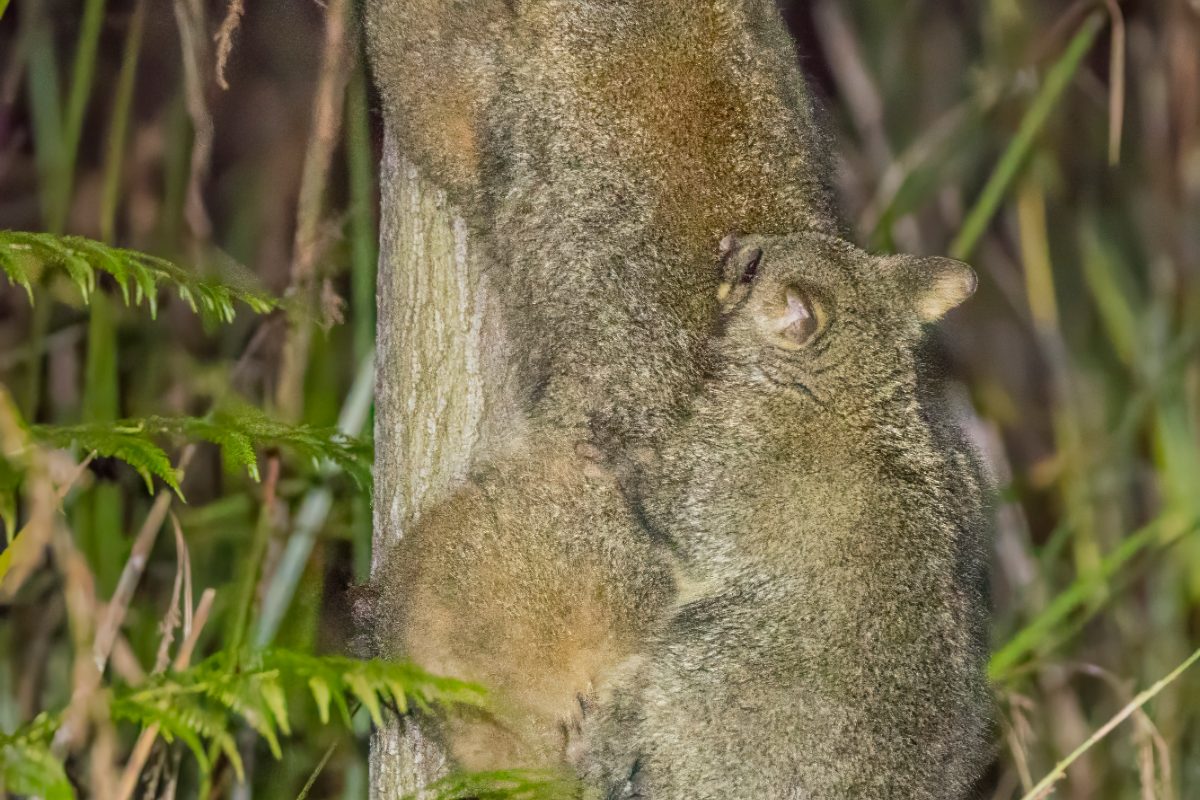
Common ringtail possums frequently have twins, and both are carried and denned together. They are also fully protected and cannot legally be trapped without a permit in Victoria. If the animal in your roof is a ringtail, the DIY options effectively reduce to nothing.
How to check before you seal anything
Listen for two sound sources
A single adult produces one set of heavy movements. A mother and dependent joey often produce noise from two positions, and the smaller one stays put while the larger leaves.
Listen for the calls
Joeys make high-pitched squeaking and chittering distinct from adult hissing and growling. Hearing them after the adult has departed is definitive.
Watch a full dusk cycle
Note what leaves and when. If noise continues in the cavity after the adult has gone out, something is still in there.
Inspect the nest site
If the roof can be entered safely, the nest itself tells you. Compacted, warm nesting material with a defined hollow indicates recent and ongoing use.
Do not close an entry point on the same night you watch a possum leave. Confirm across several nights that only one animal is using the roof, and that nothing remains inside once it has gone out. If you are not certain, you are not ready to seal.
What the law expects
Both possum species are protected under the Wildlife Act 1975 (Vic). A brushtail trapped in a building must be released on the same property within 50 metres of capture, after sunset on the day of capture, or humanely euthanised by a registered vet within 24 hours. Ringtails cannot be trapped without a permit.
Sealing dependent young inside a roof is not merely a breach of those release rules. It also engages animal cruelty provisions under the Prevention of Cruelty to Animals Regulations, because it causes a slow and entirely foreseeable death. Penalties under the Wildlife Act reach $9,246, and cruelty provisions carry considerably more.
In practice this is why the joey check is not an optional extra on a possum job — it is the step that determines whether the rest of the work is lawful. Households across Melbourne’s south-east generally arrange a possum inspection in Keysborough and neighbouring suburbs before touching the roofline for exactly this reason: the inspection establishes how many animals are present and what stage they are at, and everything else follows from that.
If you have already sealed the roof
If you closed an entry point and are now hearing scratching, calling or scrabbling from the cavity, treat it as urgent rather than waiting to see whether it stops.
Reopen the entry point
If a mother is still working the roofline outside, reopening lets her back in to the young. This is the fastest resolution and often the only one needed.
Call a licensed operator
If the young cannot reach an exit, or the mother has stopped returning, the nest has to be located and the joey physically removed.
Contact a wildlife shelter
An orphaned joey needs specialist care. Wildlife Victoria and licensed shelters take dependent young; a household cannot raise one.
Do not wait for silence
Silence here is not resolution. It usually means the animal has died, which turns a welfare problem into a dead animal problem in an inaccessible cavity.
Frequently asked questions
How do I know if the possum in my roof has young?
Listen across several nights. If noise continues in the cavity after you have watched an adult leave, something else is in there. High-pitched squeaking or chittering, as opposed to adult hissing and growling, points to a joey. If you can safely inspect the nest, a warm compacted hollow indicates ongoing use.
Is there a season when it is safe to evict?
Midsummer and midwinter carry lower risk because they sit between the main autumn and spring breeding peaks. But urban brushtails with year-round food do not always follow that pattern, so the calendar reduces risk rather than removing it. An inspection is what actually settles it.
Can I use a one-way door if I think there are young?
No. A one-way door lets the mother out and prevents her returning, which is precisely the failure mode. One-way doors are only appropriate once you are confident no dependent young remain in the cavity.
What happens if a joey is orphaned?
It needs to go to a licensed wildlife carer. Dependent possums require species-appropriate milk formula, thermal support and eventual soft release — none of which can be improvised at home, and caring for protected wildlife without authorisation is itself an offence.
Will the mother abandon young if I disturb the nest?
Brushtails are generally tolerant of some disturbance and will usually return, but repeated interference raises the risk that she relocates and leaves young behind. Minimise nest disturbance and let someone experienced handle it if young are present.
How long until I can safely proof the roof?
Until the young are independently mobile and leaving the den with the mother — practically, once no separate juvenile noise remains after the adult departs. Depending on the stage when you found them, that can be a matter of weeks. Proofing can be prepared in the meantime and closed at the right moment.
- Wildlife Act 1975 (Vic) — protection of possums, trapping and 50-metre same-property release conditions, and penalty provisions.
- Prevention of Cruelty to Animals Regulations 2016 (Vic).
- Trichosurus vulpecula reproductive biology — gestation, pouch life, weaning and dispersal timing; and Pseudocheirus peregrinus twinning.
- Developmental timings are typical ranges and vary with individual animal, food availability and local conditions.